Monday, May 18, 2026 | 9:25 AM - 10:10 AM
Jane McKee Smith, P.E., Ph.D.
University of Florida | US Engineer Research and Development Center (ERDC), Coastal and Hydraulics Laboratory
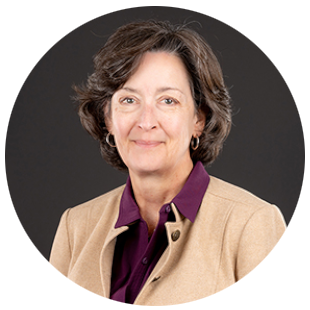 Jane McKee Smith is a Research Professor at the University of Florida and an Emeritus Senior Research Scientist at the US Engineer Research and Development Center (ERDC), Coastal and Hydraulics Laboratory. She earned a Ph.D. from University of Delaware in Civil Engineering with an emphasis in Coastal Engineering. Her research focus is on coastal hydrodynamics, including nearshore waves and currents, shallow-water wave processes, and storm surge. Her projects include theoretical and numerical studies as well laboratory and field experimentation. Smith is a member of the National Academy of Engineering and a Distinguished Member of American Society of Civil Engineers. She received the 2022 International Coastal Engineering Award. Smith serves on editorial boards for Coastal Engineering; Journal of Waterway, Port, Coastal and Ocean Engineering; and Frontiers in Built Environment and is a member of the Marine Board of the National Academies. She has over 200 professional publications.
"The Audacity of Coastal Engineering and Optimism for the Future"
Galveston was destroyed by a 1900 hurricane. It is a prime example, one of many, of how coastal engineering has deployed audacious solutions to coastal disasters. These past solutions focused on attempting to control and defy nature. Ideally, solutions proceed and prevent disasters, but in reality, disasters provide the opportunity to embrace problems, advance understanding, and deploy solutions. Often, these solutions of the past also create the problems of the future. Problems serve as a conduit to progress that yield new solutions and opportunities. Coastal Engineering as a field is relatively young and not well publicized, but its evolution has been rapid.
This growth has been accelerated by computational advances, measurement innovation, and interdisciplinary collaboration. Major advances have been made in understanding coastal hazards and risk. Communities are becoming an integral partner in developing solutions. Nature-based solutions are providing more diverse benefits. Data, once highly limited in space and time, has become ubiquitous with new measurement methods and coverage. Artificial intelligence opens new possibilities in education, analysis, and innovation. As coastal engineers continue to expand adaptable, resilient, and sustainable solutions in a nonstationary world, there is room for optimism and continued audacious innovation.
Tuesday, May 19, 2026 | 8:00 AM - 8:30 AM
Lauren Schmied
Senior Coastal Engineer, Baird & Associates
 Lauren Schmied is a Senior Coastal Engineer with W.F. Baird and Associates. She has worked in coastal engineering for more than 20 years. Prior to working with Baird, she was a national subject matter expert for coastal flood risk within the Federal Emergency Management Agency’s RiskMAP program, where she supported numerous initiatives related to modernizing the calculation and use of coastal flood hazard and risk data. While at FEMA, she provided expertise to numerous interagency initiatives including among others, the Federal Flood Risk Management Standard and the Interagency Sea Level Risk Task Force. Ms. Schmied spent over 10 years in consulting with DHI, Moffatt & Nichol and Michael Baker prior to joining FEMA. Ms. Schmied received a Bachelor’s degree in Civil and Environmental Engineering from Cornell University and a master’s degree in Coastal Engineering from the University of Delaware with a two-year period as a Peace Corps volunteer in between degrees.
Morning Highlight Session: Industry Focus
"Calculated Risk: Resilience in our Community"
Risk is often defined as the product of hazard, exposure, and vulnerability. However, these are difficult concepts to understand, even within the engineering community. To an individual or community, risk is felt as the difference between what protects us and what we cannot predict. As our understanding of hazards, policy, technology, and the workforce undergo high rates of change, the coastal engineering community is reacting to rapid shifts in how to assess risk, both for the communities we serve, and within our own community. We will examine how these compounding variables influence our calculation of risk and redefine what it means to truly adapt.
Wednesday, May 20, 2026 | 8:00 AM - 8:30 AM
Jennifer Irish
Professor, Virginia Tech University
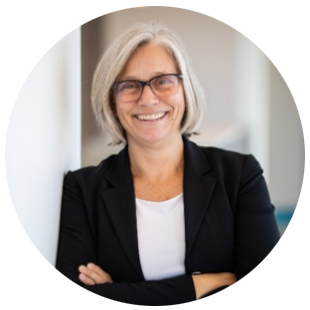 Jennifer Irish is the Charles P. Lunsford Professor of coastal engineering at Virginia Tech and a globally recognized expert in storm surge dynamics, coastal hazard assessment, and nature-based coastal infrastructure. Before transitioning to academia in 2006, she served as a Coastal Engineering Regional Technical Specialist for the U.S. Army Corps of Engineers. With over 70 journal papers and 6,000 citations, Professor Irish has made impactful contributions to coastal engineering. Her research has driven advancements in storm surge physics and probabilistic hazard assessment, hazard mitigation using vegetation and barrier islands, the impacts of sea level rise, and airborne lidar bathymetry.
She has led or co-led academic research projects totaling US$25 million, with US$4 million supporting her research program. Her achievements have earned her prestigious honors, including the U.S. Fulbright Senior Scholar Fellowship and the U.S. Department of the Army's Superior Civilian Service Award. She currently serves as Vice Chair of the Coastal Engineering Research Council and has previously served as Chair of the American Society of Civil Engineers’ (ASCE) Committee on Technical Advancement and as Secretary of ASCE’s Coasts, Oceans, Ports, and Rivers Institute Board of Governors. Professor Irish’s leadership and scientific contributions have been recognized with election to the Virginia Academy of Science, Engineering, and Medicine and to Fellow of the American Society of Civil Engineers.
Peter Ruggiero
Professor, Oregon State University
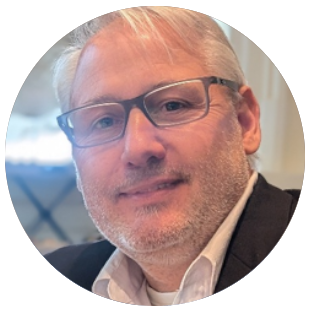 Peter Ruggiero is a Professor in the College of Earth, Ocean, and Atmospheric Sciences at Oregon State University. Ruggiero’s primary research interests include coastal geomorphology and coastal hazards, and he has over three decades of experience in assessing the impacts of storms and climate change to beaches and dunes. Currently Ruggiero’s research group is developing probabilistic approaches for assessing vulnerability to coastal hazards in light of a changing and variable climate. He currently leads several transdisciplinary projects that are assessing coastal resilience, ecomorphodynamics, and adaptation pathways in the US Pacific Northwest and elsewhere. Ruggiero is Principal Investigator and co-Director of The Cascadia Coastlines and Peoples Hazards Research Hub, a multi-institutional, NSF-funded, community engaged research project focused on increasing resiliency among coastal communities along the Cascadia coastline.
Mark Osler
Senior Advisor for Coastal Inundation and Resilience, NOAA National Ocean Service
Morning Highlight Session: Remembering the Greats
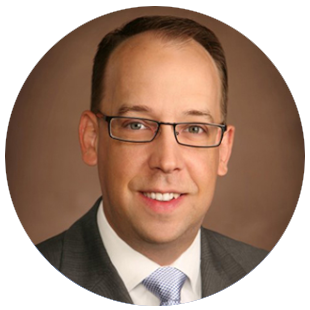 Mark Osler is the senior advisor for Coastal Inundation and Resilience for NOAA. His leadership advances coastal science and the ability of decision-makers to prepare for and respond to changes affecting the nation’s coastlines. He serves as senior advisor to NOAA leadership on defining research, applied science, and policy priorities related to understanding and reducing impacts of coastal risk to the public, our national security, and our nation’s economy.
Mark’s interagency leadership efforts include serving as the U.S. government representative to the G7’s Ocean Risk and Resilience Action Alliance; federal coordinating lead author for the Coastal Effects Chapter for the Fifth National Climate Assessment; co-chair for the Coasts Interagency Group of the U.S. Global Change Research Program; co-chair for the Interagency Council for Advancing Meteorological Services’ Subcommittee on Water Information and Services; and as the NOAA representative within various White House interagency fora, including the National Security Council, Office of Science and Technology Policy, and the Council on Environmental Quality.
Prior to joining NOAA, Mark worked for 17 years in the private sector. He holds a bachelor’s degree in civil engineering from Lehigh University and a master’s degree in civil engineering from the University of Delaware’s Center for Applied Coastal Research.
"Remembering the Greats: In Memoriam - Robert M. Sorensen"
This “in memoriam” honors Professor Emeritus Robert M. Sorensen (1938-2025) with a short overview of his career and impact, followed by a few personal stories from former students that reflect on his mentorship and lasting influence.
Thursday, May 21, 2026 | 8:00 AM - 8:30 AM
Ryan McCune
Ph.D. Student, North Carolina State University
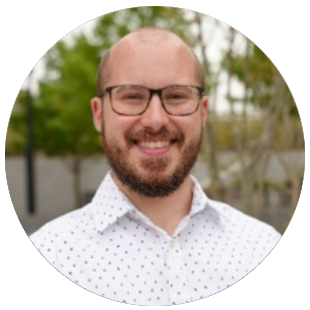 Ryan McCune is a coastal engineering doctoral student and National Defense Science and Engineering Graduate Fellow at North Carolina State University. Studying under Dr. Katherine Anarde in the Coastal Hazards Lab, his research with the Sunny Day Flooding Project focuses on sea-level rise-driven chronic flooding and climate adaptation. By combining in-situ measurements with community-engaged numerical modeling, he works to assess how future flood risks impact the livability of coastal regions. Ryan holds degrees in civil and environmental engineering from the University of Delaware. He is deeply committed to bridging the gap between complex engineering models and the public, an ongoing mission he applies directly alongside residents in areas like ”Down East” Carteret County, NC.
Morning Highlight Session: The Next Generation
"Below the Waterline: Chronic Flood Risk on Rural Roads and Impacts to Community Livability"
Sea-level rise (SLR) is driving increasingly frequent chronic flooding in coastal communities, disrupting transportation, damaging infrastructure, and affecting public health. While these floods already impact daily life, tools for evaluating potential mitigation strategies remain limited. This study introduces a framework that integrates community input with coupled hydrodynamic modeling to assess the effectiveness of different interventions for reducing multi-driver coastal flooding under present and future sea levels.
This work focuses on Down East, a rural, unincorporated area of Carteret County, North Carolina, U.S.A. where frequent, SLR-driven flooding is a persistent challenge. For example, a sensor installed in Sea Level, NC, recorded 122 flood days from May 2023 to April 2024. To model flooding, the study couples ADCIRC, which simulates large-scale drivers like tides, wind, and SLR, with SFINCS, which captures local-scale dynamics such as rainfall and drainage. Model validation was conducted using in-situ water level sensors and flood extent imagery, as well as hindcasts of historical events.
Community engagement is central to the framework. Between June 2024 and June 2025, we conducted 27 interviews with 36 residents, mapping critical community locations and discussing adaptation behaviors and potential flood mitigation strategies. Options such as ditch clearing, ditch deepening, and roadway elevation are being tested in the coupled model. Effectiveness is evaluated based on changes in flood frequency, depth, duration, and roadway access to important community-identified sites. Results are shared iteratively through community meetings and online platforms to guide decision-making and strengthen understanding of how strategies align with community priorities.
Friday, May 22, 2026 | 8:00 AM - 8:30 AM
Robert Nicholls
Professor of Climate Change Research, University of East Anglia / University of Southampton
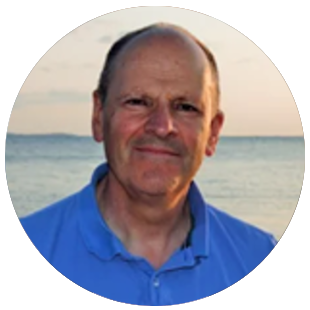 Robert Nicholls was the Director of the Tyndall Centre for Climate Change Research from 2019 to 2024 and is currently Professor of Climate Adaptation at the University of East Anglia and Professor of Coastal Engineering at the University of Southampton. His research focusses on coastal problems and their solution, with a strong focus on sea-level rise, coastal erosion and flooding, and how society can adapt to these changes. He has studied the implications of sea-level rise in the UK and in many of the most sensitive regions of the world such as deltaic areas (e.g., Bangladesh) and small islands (e.g., the Maldives). A distinctive dimension of his research is taking an integrated assessment approach — assessing the coastal zone as an interacting system. This allows all the full range of drivers and factors of change to be considered, facilitating policy-relevant analysis and conclusions.
Robert is one of the principal developers of the DIVA (Dynamic Interactive Vulnerability Assessment) model, which assesses coastal risks and adaptation at broad scales up to the globe. DIVA has been used extensively for policy analysis such as estimating global coastal protection costs as part of the World Bank funded ‘Beyond the Gap’ 2019 study of infrastructure investment costs for climate change. He continues to use DIVA in international research such as in the European Union Horizon 2020 Programme (including the PROTECT, CoCliCo and REST-COAST Horizon2020 Projects).
Robert led a global assessment of flood exposure in large port cities with the Organisation for Economic Cooperation and Development (OECD). He has also led significant international projects on the integrated assessment of the development of deltas, including climate change, sea-level rise and other key human-induced drivers making an integrated assessment approach essential. Much of this recent work is based in Bangladesh, via the ESPA Deltas and DECCMA Projects, including supporting the Bangladesh government Delta Plan 2100.
Robert has published nearly 300 peer-reviewed papers, is the co-editor of six books, and many articles and book chapters, including authorship of five assessment reports of the Intergovernmental Panel on Climate Change (IPCC). He co-led the World Climate Research Programme Sea-Level Rise Grand Challenge to deliver sea-level science to support better coastal impact and adaptation assessment from 2013 to 2022. He is a member of the COPRI Coastal Engineering Research Council who organize the bi-annual International Conference on Coastal Engineering (ICCE).
Morning Highlight Session: The Global Perspective
"Broad-scale Assessments of Sea-Level Rise and the Future of Coastal Engineering"
Climate-induced sea-level rise emerged as an issue in the late 1980s and has been a key issue in climate change discussions ever since. This includes consideration of global perspectives on exposure and risks and how to adapt to these changes. In this talk, I will briefly review the state-of-the-art in these assessments and the implications for the future of coastal engineering. This will include consideration of responses around advance (or reclamation), coastal protection, structural accommodation and retreat options, as well as implications for informatic and working with nature options.